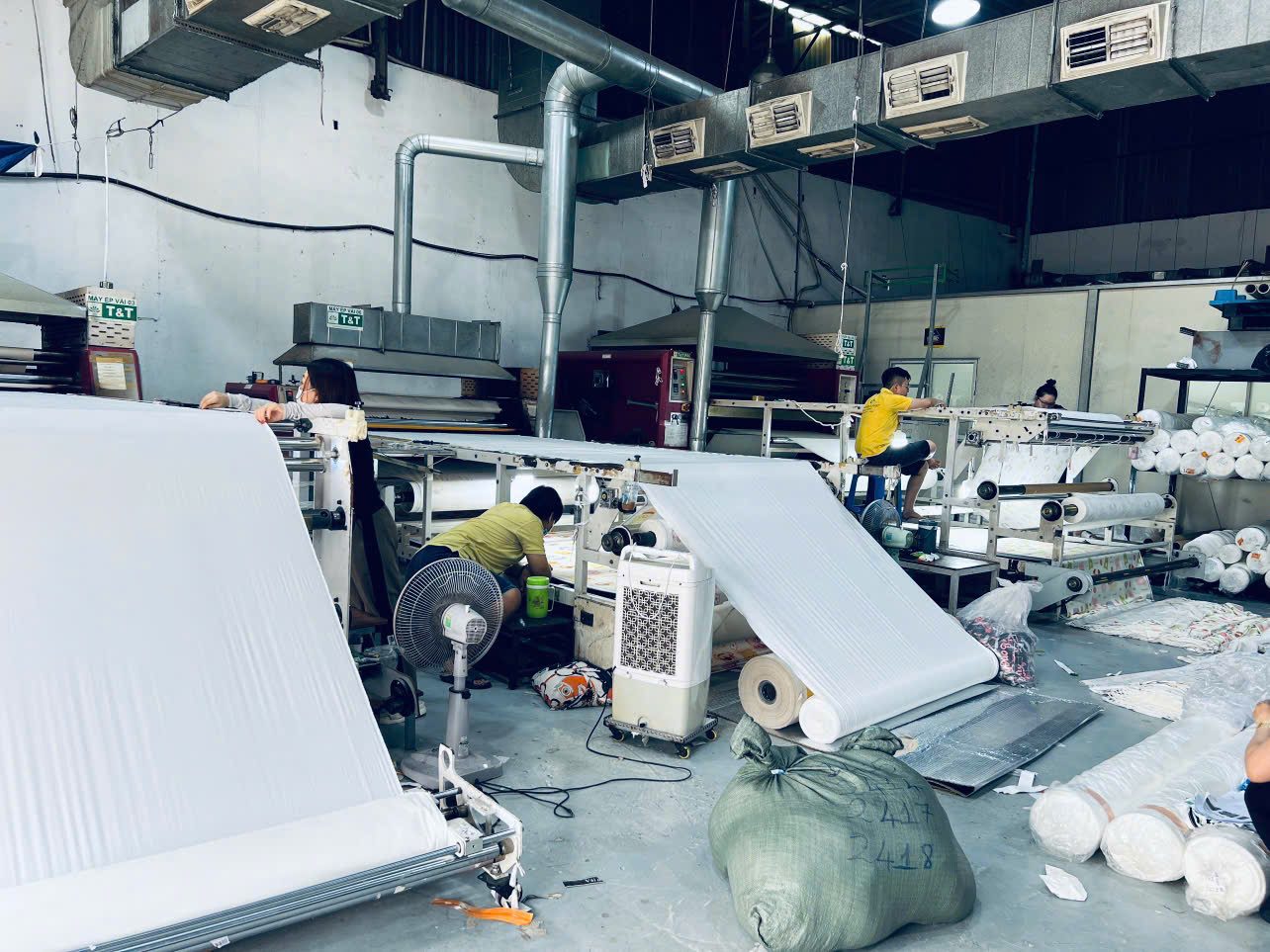
Fabric printing is the process of applying images and patterns to the surface of fabric using a specific printing technology. For large-quantity orders on polyester fabric, sublimation printing on fabric rolls by the meter is usually a clean, color-consistent approach. Our workshop only accepts printing by the meter from 50m, and does not take small one-off print jobs.
Many garment factories and brands ask us: 'There are several ways to print fabric now, so which one should I choose for my order?'. This is worth asking before you place an order, because choosing the wrong method means color mismatch, wasted fabric and delays. This article briefly covers each method, then explains clearly when sublimation printing is a sensible choice.
Contents
- What are the common fabric printing methods today?
- Which method should you choose for large-quantity fabric printing?
- What is sublimation printing on fabric rolls by the meter?
- What steps are in the sublimation fabric printing process?
- What is the capacity of a sublimation workshop for large-quantity fabric?
- Frequently asked questions
What are the common fabric printing methods today?
There are three fabric printing methods that customers mention most often: screen printing, direct digital printing on fabric, and sublimation printing. Each suits a different type of order, and no single method fits every case.
Screen printing
Screen printing uses mesh frames, one frame per color, and ink is pushed through the mesh onto the fabric. It suits patterns with few colors, solid color areas and heavy repetition. When a design has many colors, gradients or fine detail, many frames must be made, preparation takes long, and it is hard to keep colors accurate.
Direct digital printing on fabric
Here an inkjet machine prints ink directly onto the fabric surface. Multi-color images can be printed, and it is commonly used for small quantities and sample runs. The fabric needs pre-treatment before printing and often additional treatment after printing, so when an order reaches thousands of meters this stage involves a lot of work.
Sublimation printing
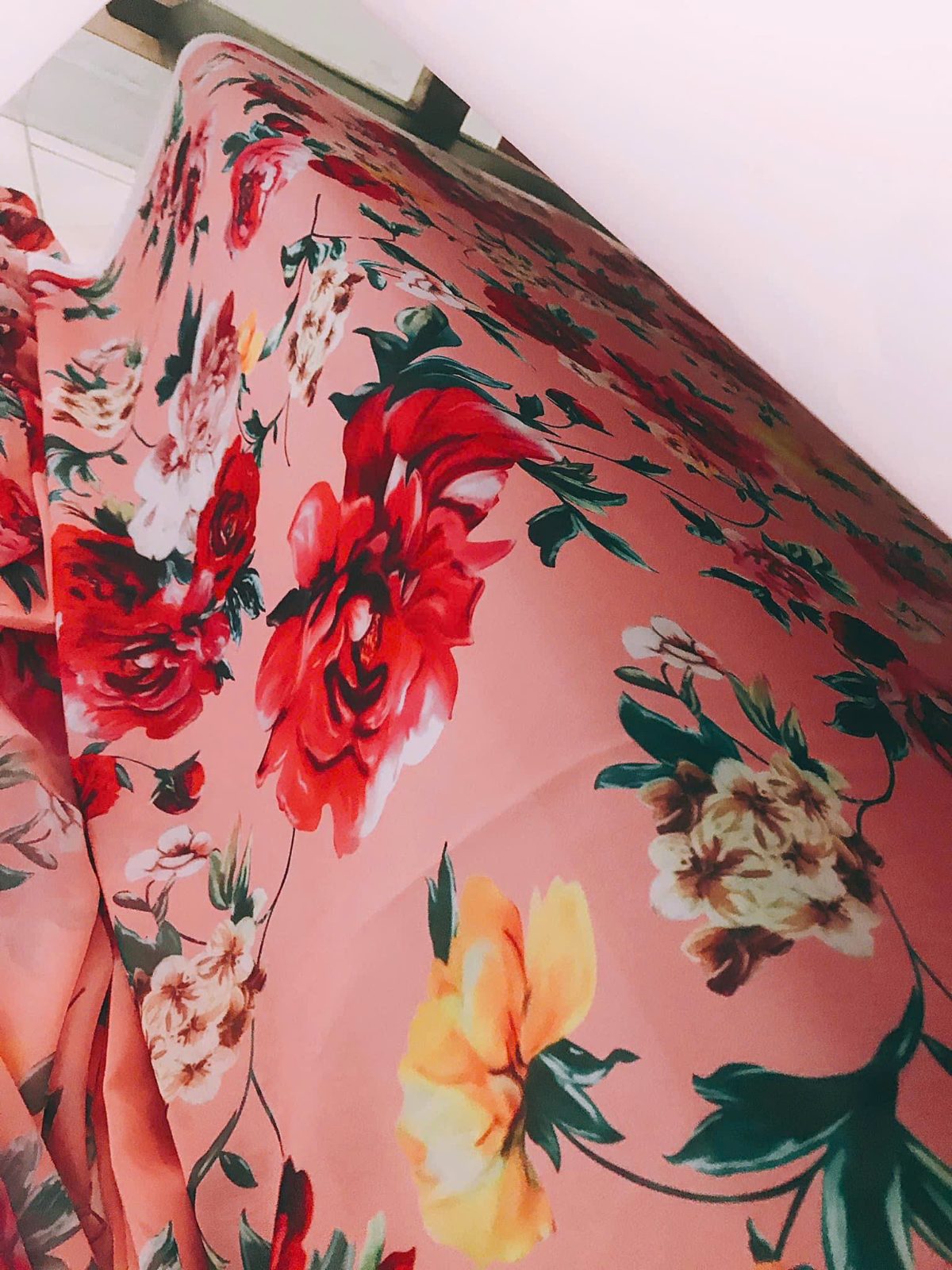
Sublimation printing first prints the image onto special paper, then uses heat and pressure to transfer the ink onto the fabric. The ink penetrates the fibers rather than forming a film on the surface, so the fabric stays soft and the print does not peel. This method is used for polyester and high-polyester blends, and can print multi-color images, gradients and full-width all-over patterns.
Which method should you choose for large-quantity fabric printing?
For large-quantity fabric printing on poly materials, sublimation printing is often a good fit because the print is consistent from the start of the roll to the end, multi-color patterns do not require frames, and industrial machines run continuously by the meter. You can use the criteria below as a quick reference:
- Fabric material: sublimation suits polyester fabric; the higher the polyester content, the better the color, ideally from around 70% polyester upward. Fabrics with low polyester content give pale colors that do not match the artwork.
- Quantity: large orders are counted in meters, and continuous roll printing keeps color even. Small orders of a few meters are not our workshop's strength.
- Design: for multi-color designs, gradients and full-width all-over patterns, sublimation handles them more cleanly than making a separate frame for each color.
- Color fastness and fabric feel: the ink penetrates the fibers, so the fabric surface stays soft with no film on the surface.
- Schedule: printing fabric by the meter on wide-format machines makes it easier to plan a clear schedule for the whole batch.
If you would like to see which fabrics are suitable for printing, see the fabrics and applications section of our workshop.
What is sublimation printing on fabric rolls by the meter?
Sublimation printing on fabric rolls means printing the image onto whole rolls of fabric meter by meter, then delivering them back as rolls for your garment factory to spread and cut. You provide the pattern file and the number of meters, and we print to the correct fabric width and the approved color.
This approach suits garment factories, fashion brands, sportswear and export orders, where every batch of fabric needs to be identical for uniform cutting and sewing. A common worry when ordering prints is that a later batch differs in color from the earlier one, or that the sample test looks one way and the real production another. With sublimation roll printing, we test color on 1–2m of real fabric first, and only run the full order after you approve it.
After printing, we also laser cut to pattern, so the fabric edges are clean with little fraying and the cut pieces match the correct size. We only print and laser cut; we do not sew. Your garment factory takes the printed fabric and sews the finished products. To read more about this approach, see our sublimation printing and laser cutting services.
What steps are in the sublimation fabric printing process?
The sublimation fabric printing process for orders by the meter has the steps below, and every step includes checks to keep color consistent across the whole batch.
Step 1: Receive and adjust the print file
You send the pattern file, the fabric width and the number of meters to print. We review the file and adjust it to the correct width and pattern repeat, so that the image does not shift when the fabric is spread for cutting and sewing.
Step 2: Color test on 1–2m of real fabric
We print a 1–2m test for you to approve the color. This step matters for large orders because the color on a screen differs from the printed color, especially when switching to a different fabric material.
Step 3: Print the image onto special paper
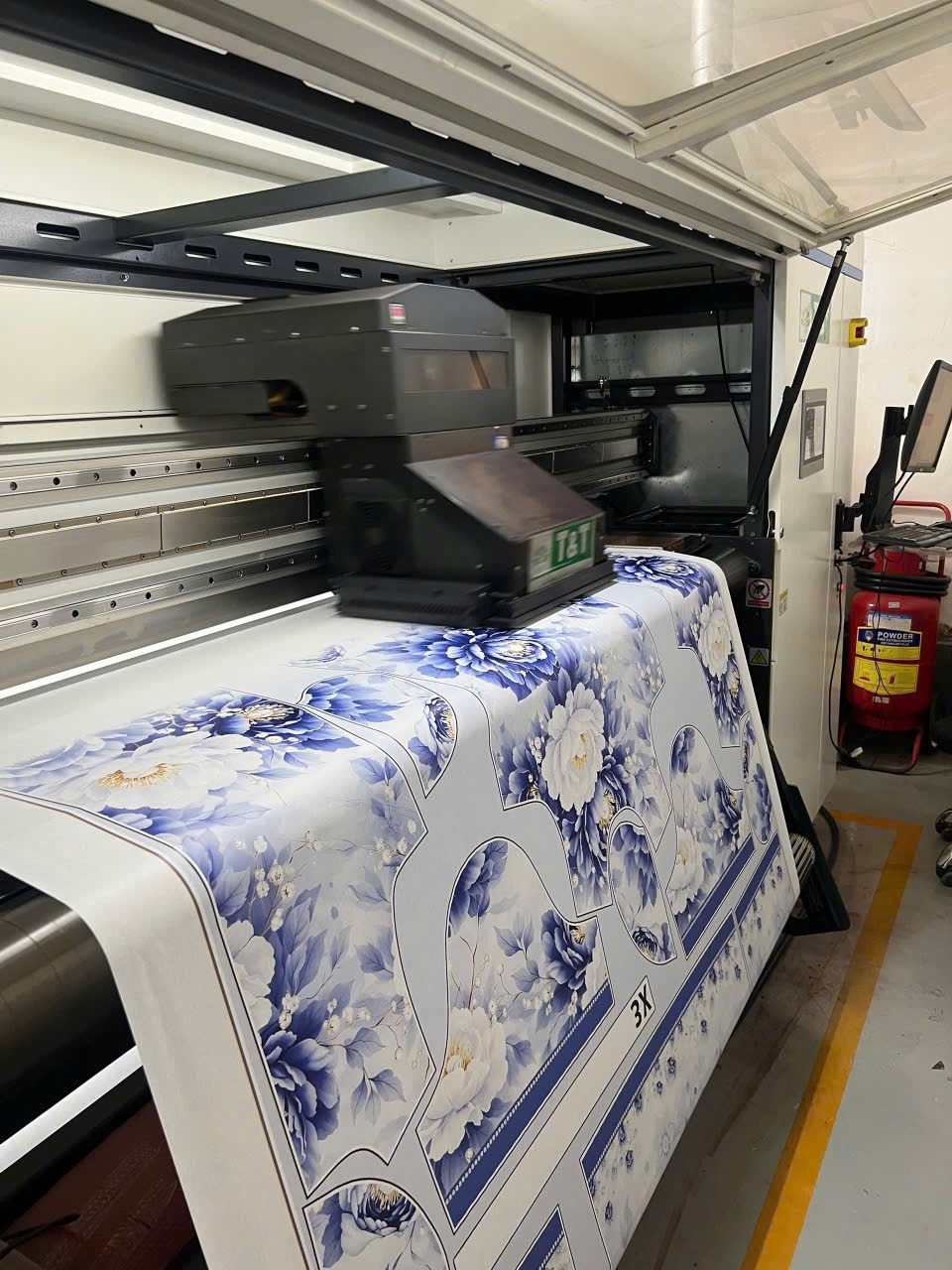
An industrial printer with Kyocera print heads prints the pattern onto a paper roll. Our workshop uses inks certified OEKO-TEX® ECO PASSPORT (EP 49476).
Step 4: Heat press to transfer the image onto the fabric
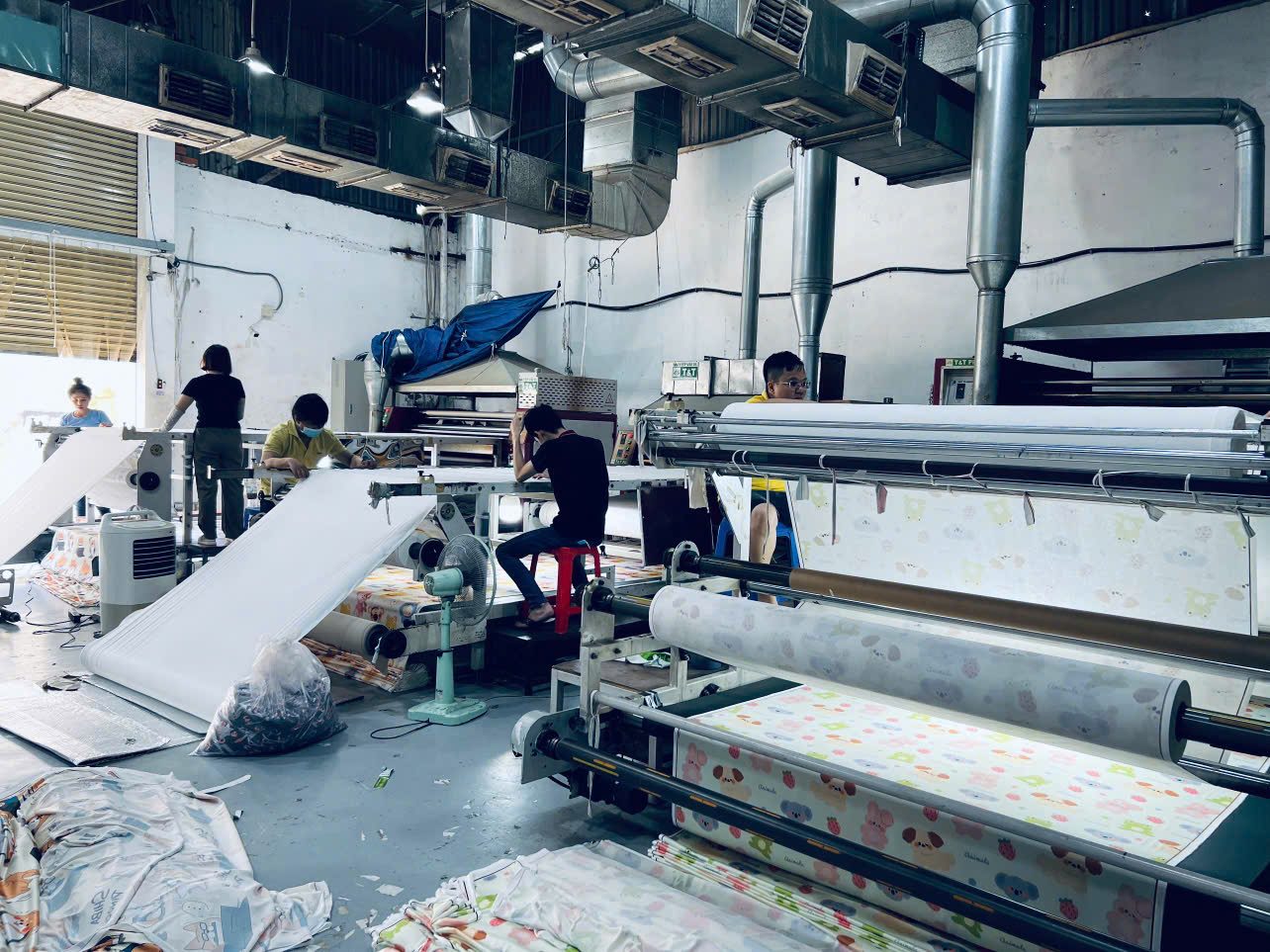
The paper and fabric roll are fed through the heat press. Heat and pressure drive the ink into the fabric fibers, and the fabric is then rolled back up.
Step 5: Inspection, laser cutting to pattern (if needed), packing
The fabric is checked for color and pattern. For orders that need cutting, a laser cutting machine with a camera cuts to the pattern, following the outline of the printed image precisely. The goods are then packed and delivered.
You can see this stage in practice at our workshop:
What is the capacity of a sublimation workshop for large-quantity fabric?
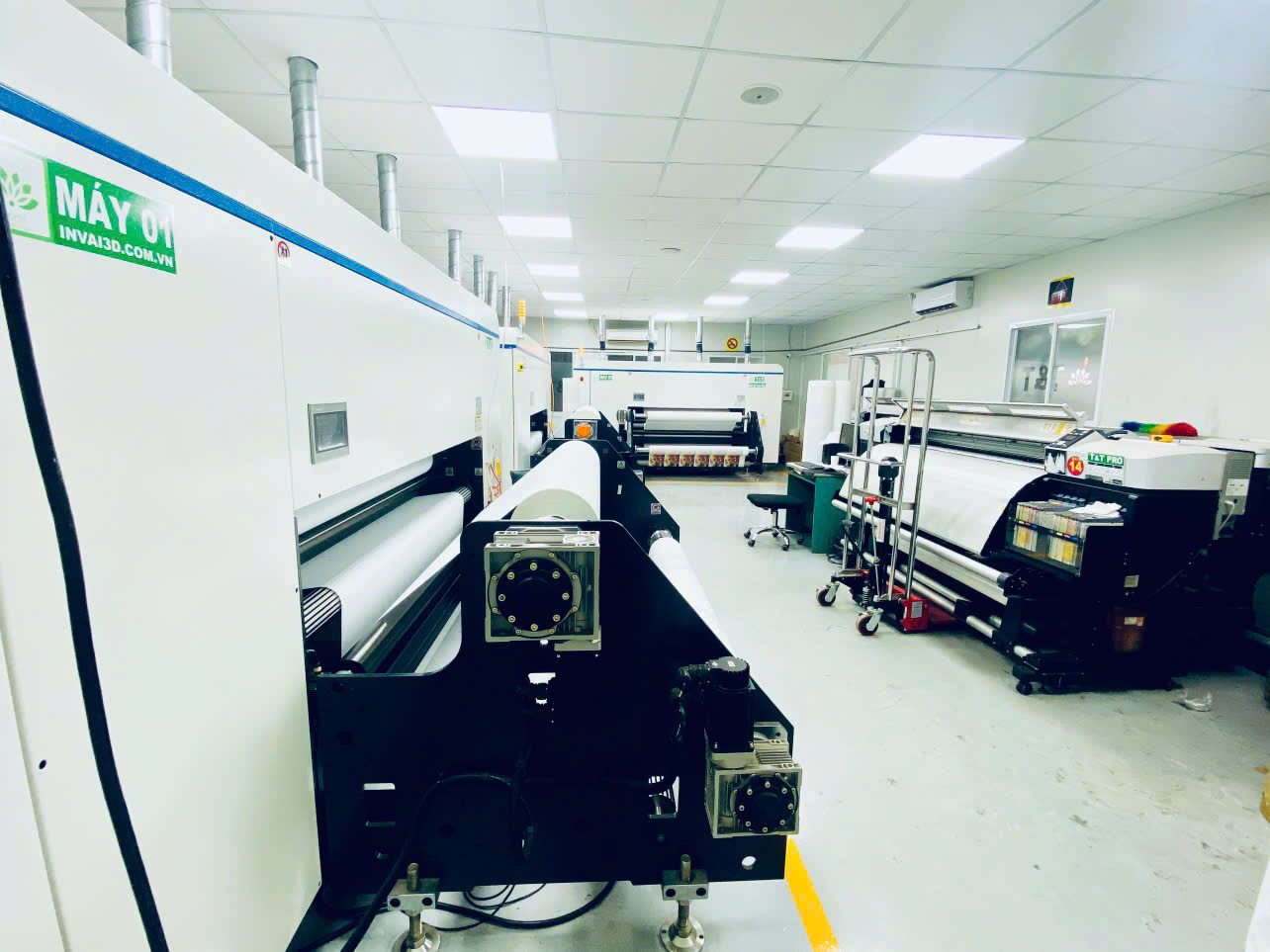
The T&T sublimation workshop runs industrial machines and specializes in large-quantity orders. Here are the actual figures to help you plan:
- Print heads: industrial printers with Kyocera print heads.
- Print width: usually 1.6m, up to 1.8m.
- Capacity: over 10,000m of fabric per day.
- Minimum order: from 50m for fabric printing by the meter; printed panels from 200 pieces.
- Color approval: 1–2m color test before printing the order.
- Laser cutting: machines with cameras, cutting to pattern.
- Documents: VAT invoices issued.
- Coverage: contract production accepted nationwide.
For more on the work categories we handle, visit the services section.
Frequently asked questions
You can also watch this video of our workshop printing large-quantity fabric rolls:
Does the workshop accept small fabric print jobs of just a few meters?
We do not accept small one-off jobs. Sublimation fabric printing by the meter starts from 50m, and printed panels start from 200 pieces. Our workshop runs high-capacity machines, so we focus on large-quantity orders for garment factories, brands and businesses.
Which fabrics can sublimation printing be used on?
It is used for polyester and high-polyester blend fabrics such as cooling knit, bird's-eye mesh, pique mesh, polyester pique, 4-way stretch, sports fabrics, satin, chiffon, poly canvas, poly oxford, parachute fabric and poly velvet. The higher the polyester content, the better the color, ideally from around 70% upward.
What is the maximum fabric width that can be printed?
The print width is usually 1.6m, up to 1.8m. Please tell us the width of the fabric you are using so we can adjust the file correctly.
How long does an order take?
The timing depends on the number of meters, the fabric type and whether laser cutting is needed. Send us your file, the number of meters and the date you need the goods via WhatsApp/Zalo, and we will plan a specific schedule.
Do you issue VAT invoices and ship to other provinces?
Yes. We issue VAT invoices and accept contract production nationwide.
T&T is a sublimation printing workshop for large-quantity fabric in Ho Chi Minh City, accepting fabric printing by the meter and laser cutting to pattern for garment factories. Send your file and number of meters via WhatsApp/Zalo +84 395 46 46 86, and we will send a quotation the same day. You can also view information in advance on our quotation page.
📍 Office – Workshop: 416A – 414/11G Tan Ky Tan Quy, Tan Son Nhi Ward, Ho Chi Minh City, Vietnam
📞 Hotline/WhatsApp/Zalo: +84 395 46 46 86
🌐 inchuyennhiet.com.vn · invai3d.com.vn