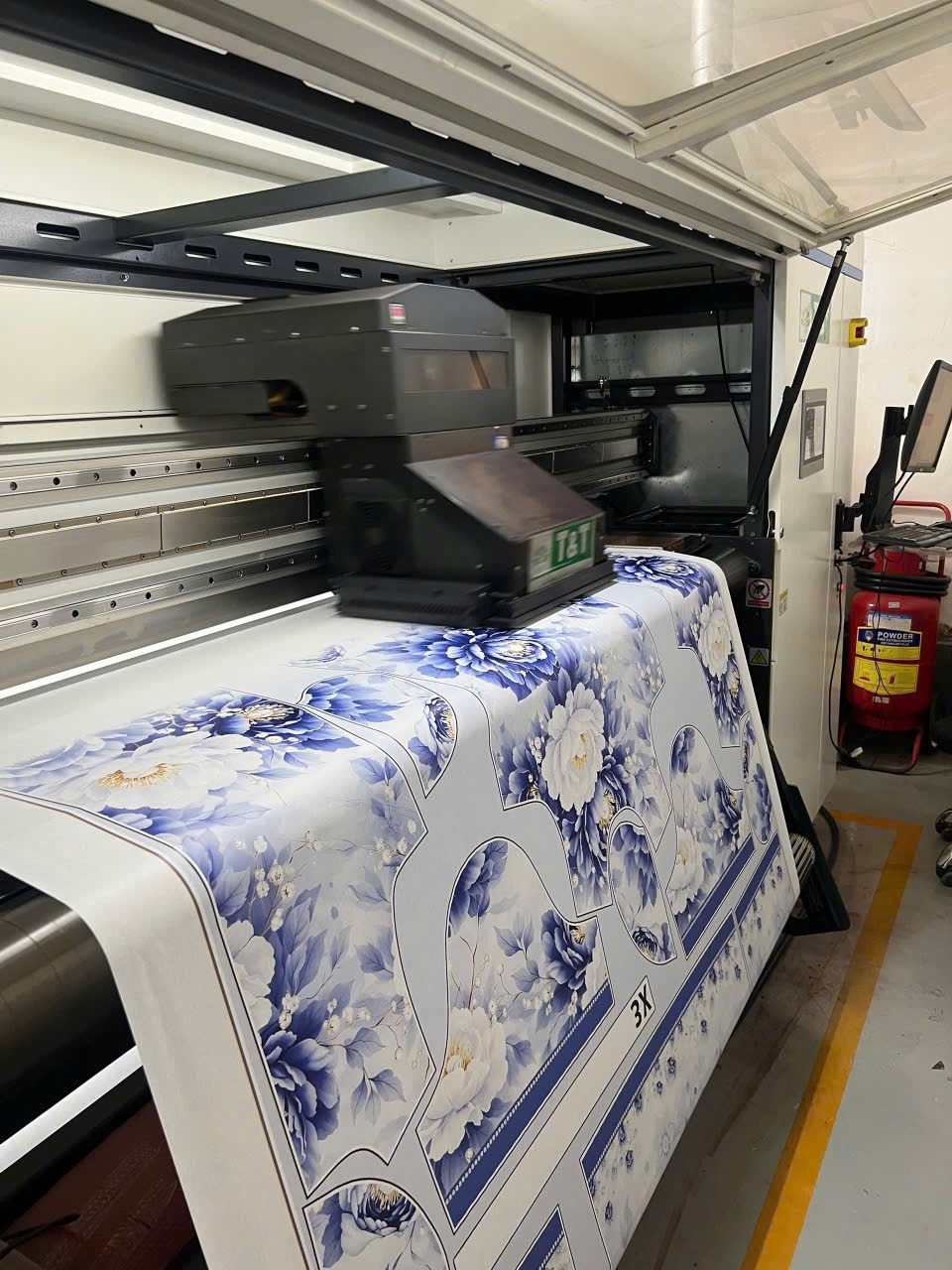
Digital fabric printing means printing a design onto fabric straight from a computer file, with no screens or plates, and sublimation printing is one way of doing it: the design is printed onto special transfer paper, then heat-pressed so the ink bonds into polyester fibers.
Garment factories and fashion brands often ask us the same thing: if both methods print from a file, how is direct-to-fabric printing different from sublimation printing, and which one carries less risk for an order of thousands of meters? This article answers from our workshop's experience, from the buyer's point of view.
Contents
- What is digital fabric printing, and is it the same as sublimation?
- How does direct digital printing differ from sublimation printing?
- Digital or sublimation printing for bulk orders?
- What are the steps of roll-to-roll sublimation printing by the meter?
- What capacity does a bulk sublimation workshop need?
- Frequently asked questions
What is digital fabric printing, and is it the same as sublimation?
Digital fabric printing puts a design from a file directly onto fabric, without screens, so changing the design only means changing the file. Sublimation printing belongs to this group because it also prints from a file; the difference is that the design is printed on paper first, then transferred to the fabric with heat.
Put simply, "digital" describes how the image is made (from a file, on an inkjet printer), while "sublimation" describes how the ink gets into the fabric. That is why a search for digital printing on fabric returns both kinds. The right choice depends on the fabric you use and the quantity you need.
How does direct digital printing differ from sublimation printing?
Each method has its own strengths, and neither is right for every fabric. Here is a quick comparison:
- Direct-to-fabric printing (DTG, pigment, reactive): ink is jetted straight onto the fabric surface, suited to natural fibers or specially treated fabrics. It usually needs fabric pre-treatment and steaming or washing after printing, and the print width and fabric types depend on each machine.
- Sublimation printing on polyester: the design is printed on paper, then heat-pressed so the ink bonds into the polyester fibers. No steaming or washing after printing, and colors come out clear on polyester and high-polyester blends.
- Fabric: sublimation is for polyester and high-polyester blends, ideally around 70% polyester or more for good color. Direct printing handles more materials, but each fabric needs its own process.
- Color durability: with sublimation the ink goes into the fibers and forms no surface film, so it does not peel or crack. The fabric stays soft and stretches well on stretch knits and 4-way stretch fabrics.
- Bulk orders: roll-to-roll sublimation runs continuously by the meter, which makes it easier to keep color consistent across rolls. Direct printing suits fabrics and colors with special requirements.
Digital or sublimation printing for bulk orders?
If your fabric is polyester or a high-polyester blend and the order runs from a few hundred meters up, sublimation printing by the meter is usually the sensible choice: wide-format machines run continuously and keep color stable from roll to roll. If your fabric is mostly natural fiber, ask carefully about a suitable direct printing method.
On large orders, the real worries are usually not whether the design looks good, but these:
- Will the next batch match the color of the last one, especially when the same style is reordered several times?
- The small sample looked fine, but will bulk production look the same?
- Will the fabric edges fray, and will cut pieces match the pattern sizes?
- Will delivery keep up with the sewing and shipping schedule?
With roll-to-roll sublimation, these are handled by approving color on a printed test first, then running production with the same process and the same approved file. When finished pieces need exact shapes, the printed fabric is laser-cut to your patterns for clean edges and correct sizes.
Who sublimation printing by the meter suits
Garment factories making uniforms, sportswear and printed fashion; brands that need custom printed fabric for each collection; companies producing export orders that need clear documentation.
When to consider another method
If your fabric is a natural fiber, or you need a special effect polyester cannot give, direct printing may suit you better. We specialize in sublimation printing, so our advice stays within that scope. Send us your file and fabric type and we will tell you whether it fits.
What are the steps of roll-to-roll sublimation printing by the meter?
Printing fabric by the meter at our workshop goes through five steps, each one there to make bulk production match the approved sample.
Step 1: Receive and prepare the print file
You send the design file. We check resolution, fabric width and pattern repeat, then adjust the file so the roll prints seamlessly with no broken patterns.
Step 2: Print a 1–2 m color test
We print 1–2 meters on the exact fabric you will use. You approve color on this sample, because color on fabric differs from color on a screen.
Step 3: Print the paper on wide-format machines
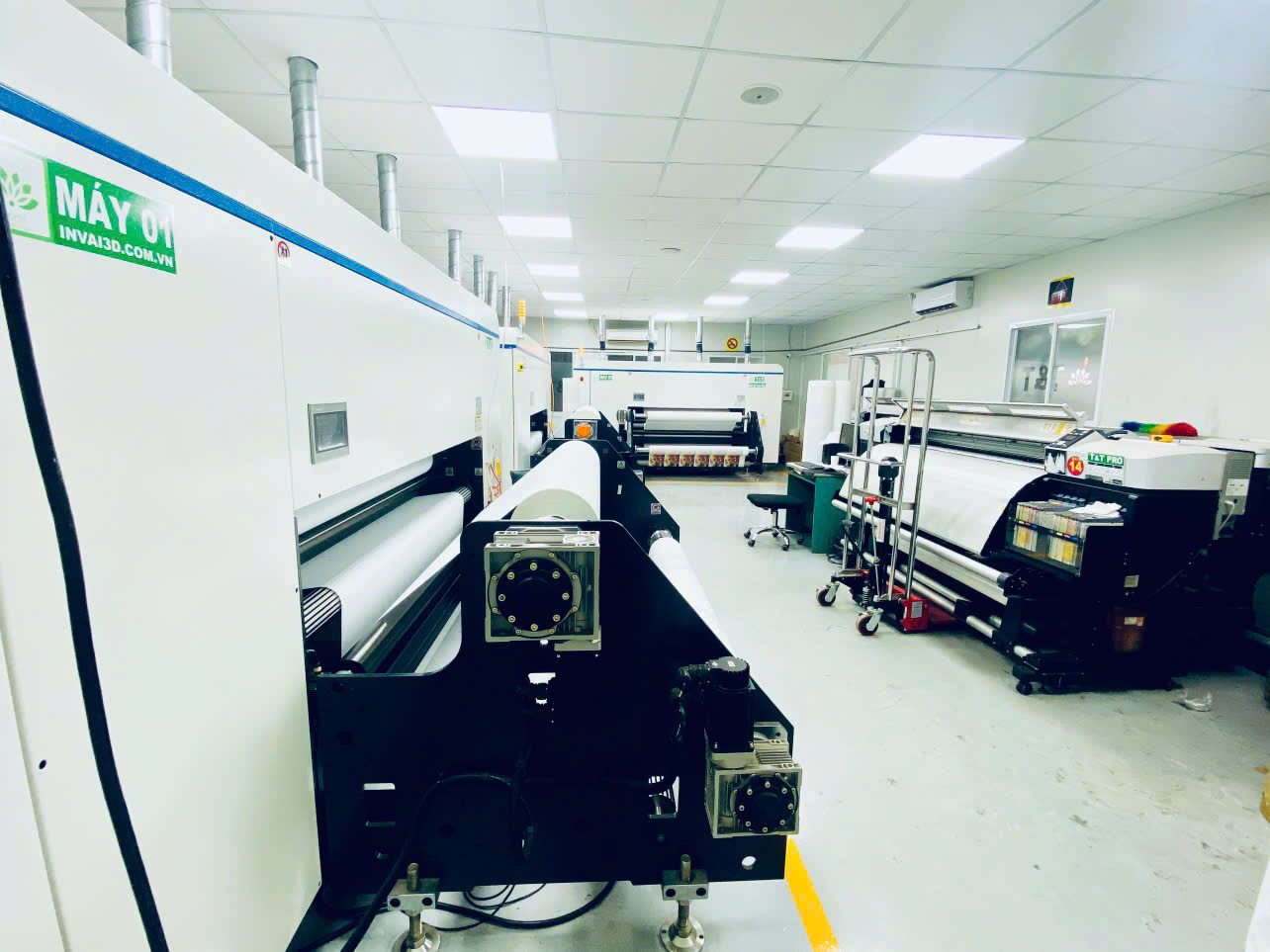
The design is printed on sublimation paper with industrial printers using Kyocera print heads. Our workshop uses inks certified OEKO-TEX® ECO PASSPORT (EP 49476).
Step 4: Heat-transfer the design onto the fabric roll
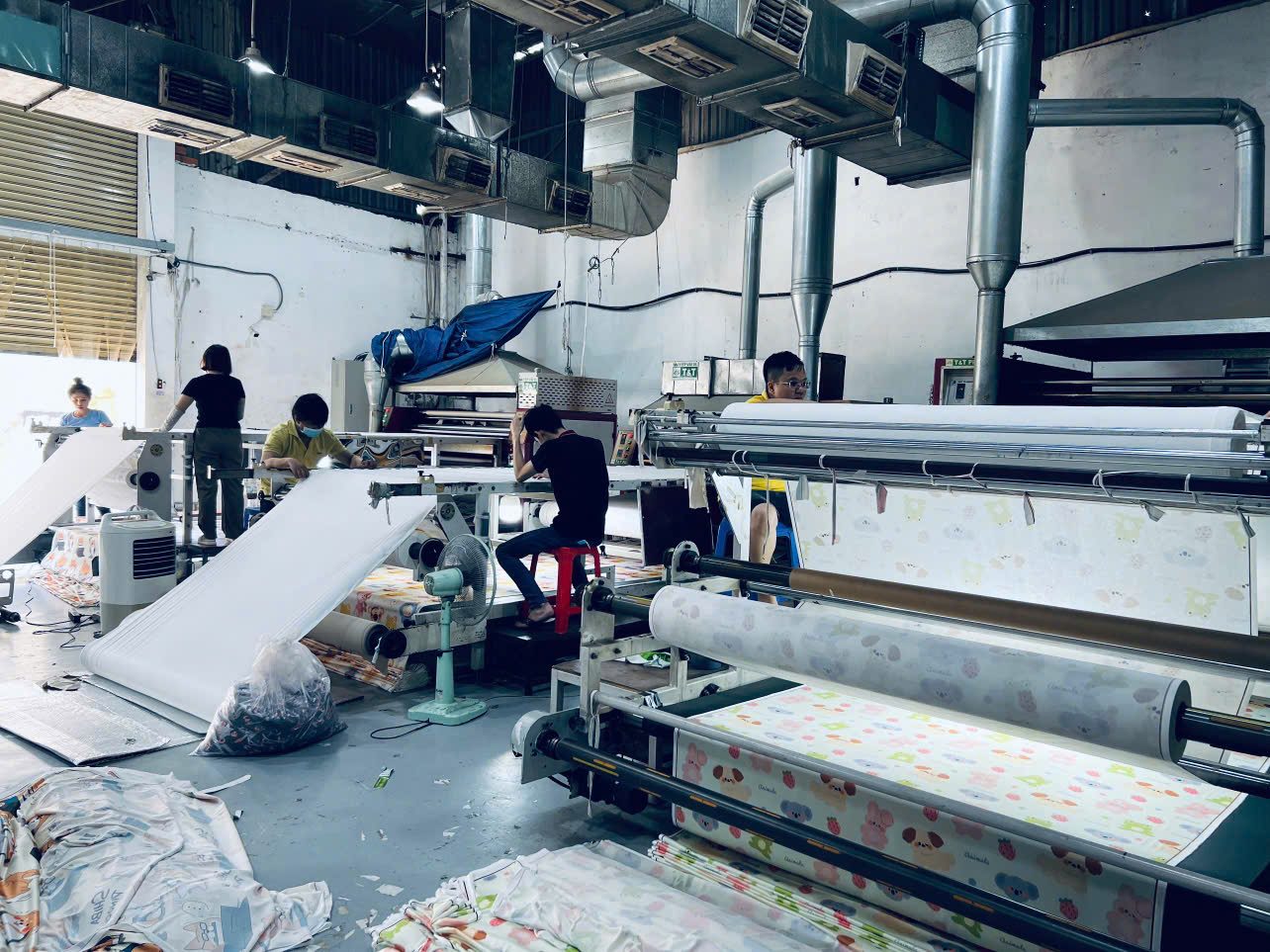
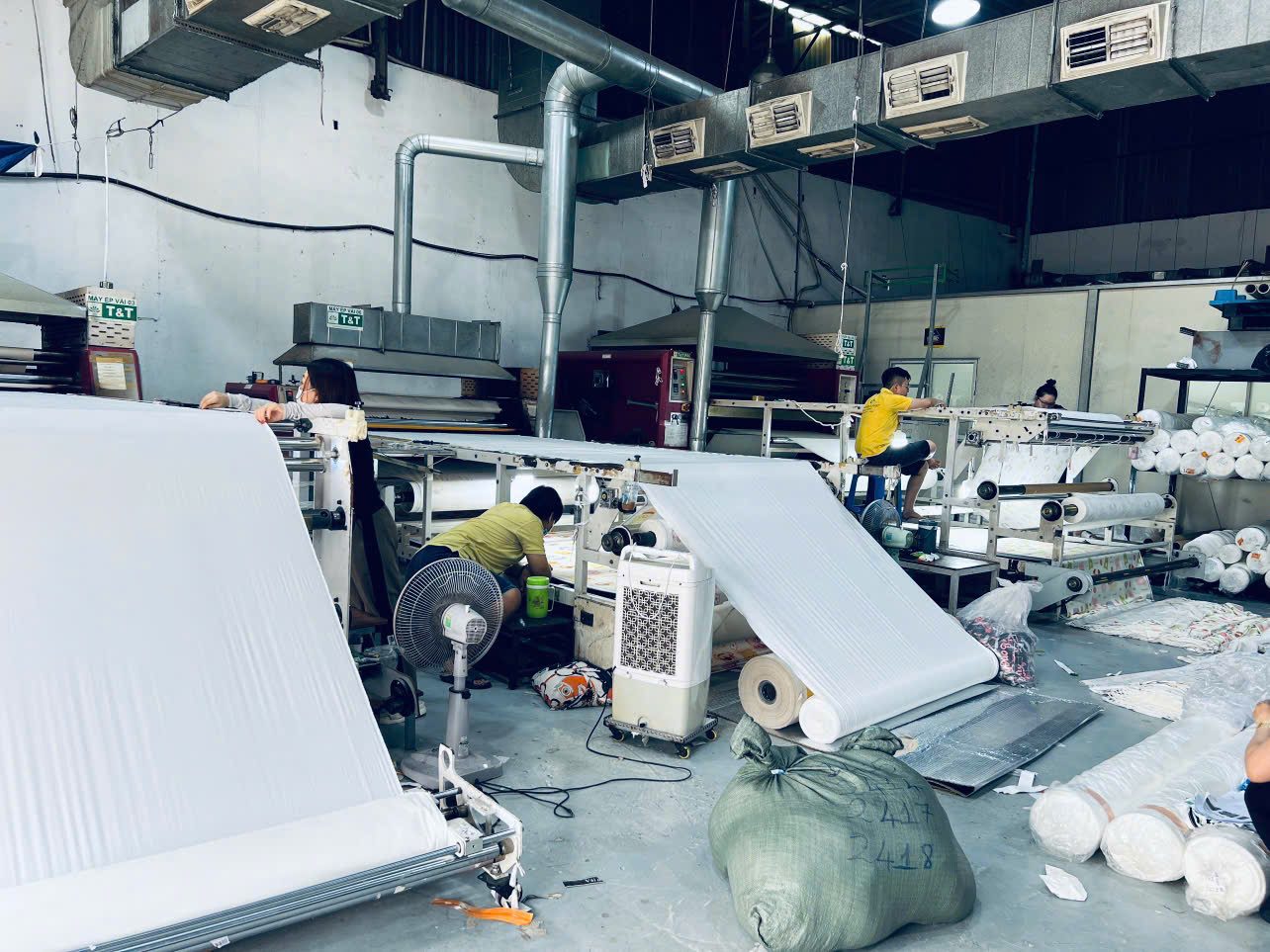
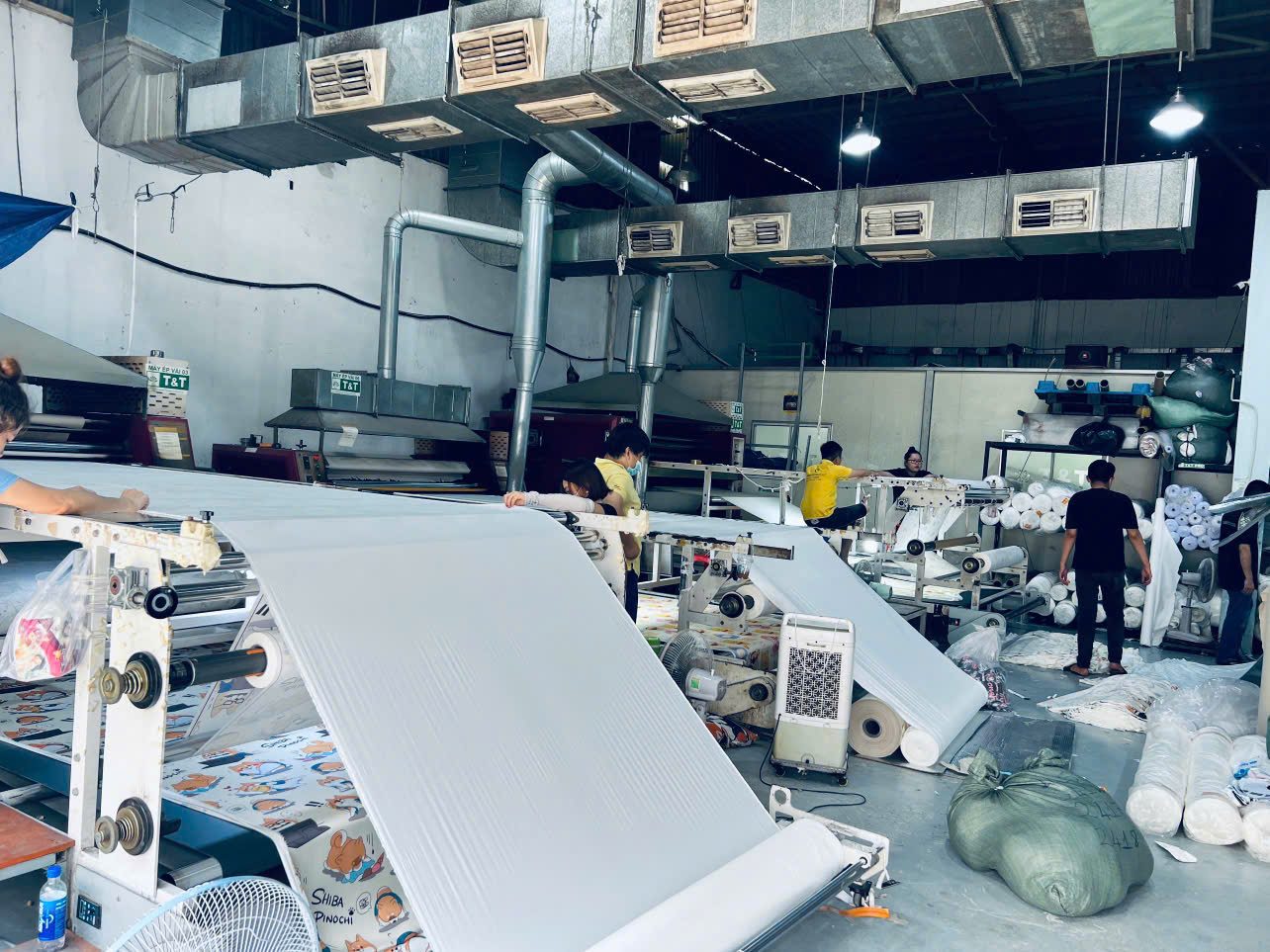
Paper and fabric run through the heat press together; the ink bonds into the fibers and the fabric is rolled up as a finished roll. This step decides color strength and evenness across the whole roll.
Step 5: Inspect, laser-cut to pattern (if needed), deliver
The fabric is checked for color and surface. If you need it, we laser-cut to your patterns with a camera-guided cutter for exact shapes and clean edges. We do not sew; you take the fabric to your own factory for sewing.
See this process at our workshop:
What capacity does a bulk sublimation workshop need?
The T&T sublimation workshop runs industrial machines and takes bulk fabric-by-the-meter orders for garment factories, brands and companies. Our actual specifications:
- Industrial printers with Kyocera print heads.
- Standard print width 1.6 m, up to 1.8 m.
- Capacity around 5,000–10,000 m per day.
- Fabric by the meter from 50 m; printed panels from 200 pieces.
- 1–2 m color test before production.
- Laser cutting to pattern with a camera-guided cutter.
- VAT invoices; orders taken nationwide.
- Production scheduling for urgent orders.
Frequently asked questions
Is digital fabric printing the same as sublimation printing?
Sublimation is a form of digital fabric printing, since it also prints from a file with no screens. The difference is that the design is printed on paper first, then transferred to polyester with heat.
What is the minimum order for sublimation printing by the meter?
We print fabric by the meter from 50 m, and printed panels from 200 pieces. Send us your file and meterage and we will advise on the right setup.
How long does roll-to-roll sublimation printing take?
It depends on the meterage, the complexity of the file and whether laser cutting is needed. Send us the date you need the goods and we will plan a production schedule for your order.
What is the maximum print width, and which fabrics can be printed?
Standard width is 1.6 m, up to 1.8 m. We print polyester and high-polyester blends such as stretch knits, mesh knits, 4-way stretch, sportswear fabrics, satin, chiffon, polyester canvas, polyester oxford, taffeta and polyester velvet. The higher the polyester content, the better the color, ideally around 70% or more.
Does sublimation printing need screens?
No. You only need the print file. Changing the design means changing the file, which suits orders with many designs or orders that need a test print first.
T&T is a bulk fabric sublimation printing workshop in Ho Chi Minh City, printing fabric by the meter and laser-cutting to pattern for garment factories. Send your file and meterage via WhatsApp/Zalo +84 395 46 46 86 for a quote.
📍 Office – Workshop: 416A – 414/11G Tan Ky Tan Quy, Tan Son Nhi Ward, Ho Chi Minh City, Vietnam
📞 WhatsApp/Zalo: +84 395 46 46 86
🌐 inchuyennhiet.com.vn · invai3d.com.vn