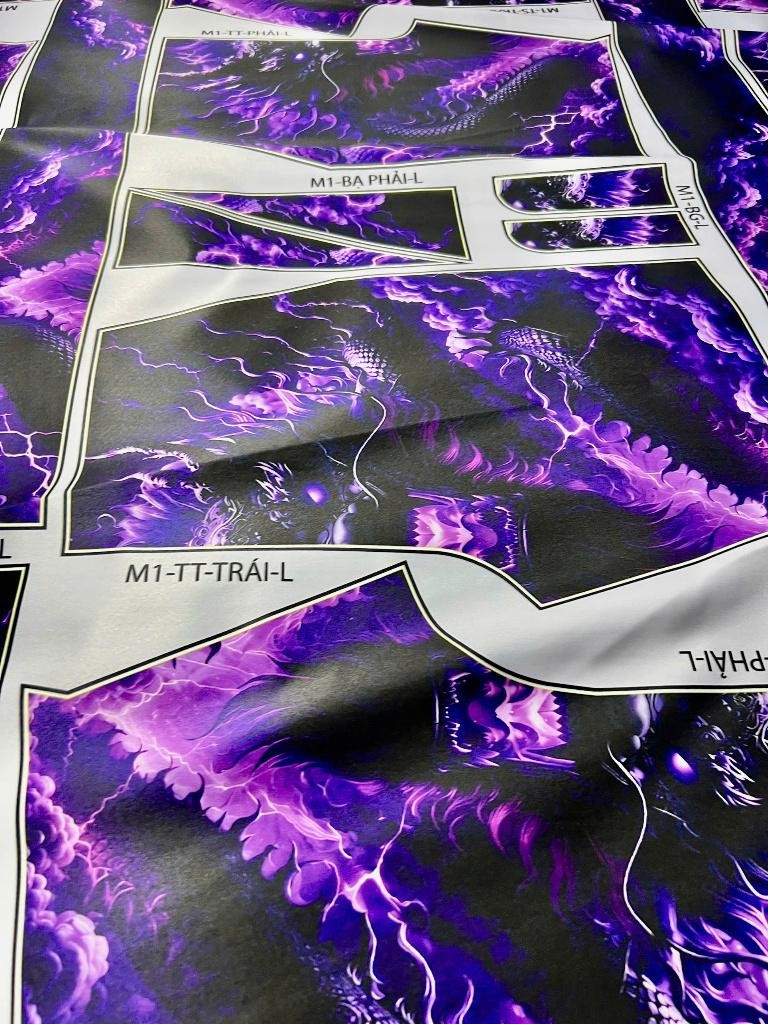
Print onto Transfer Paper
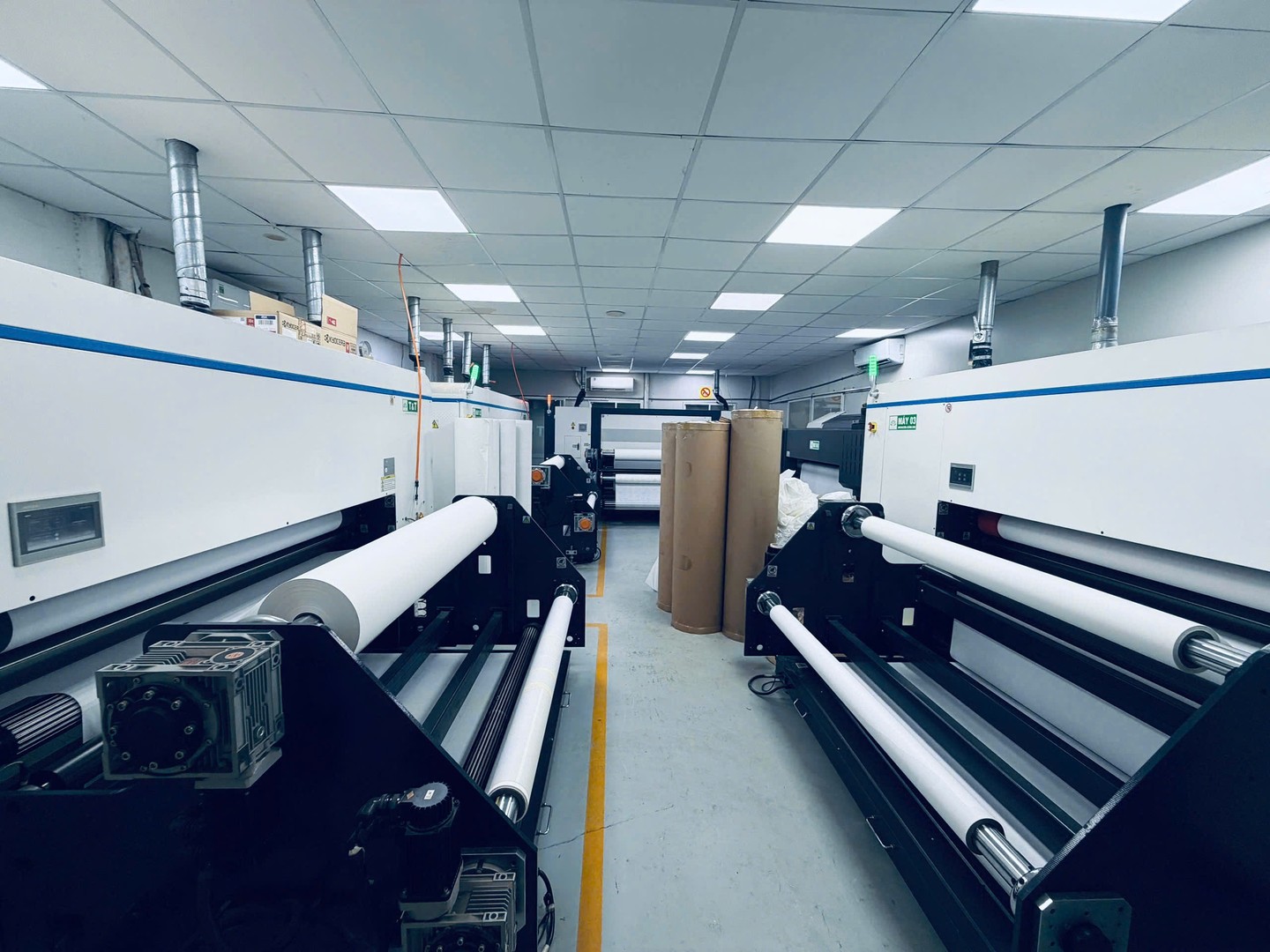
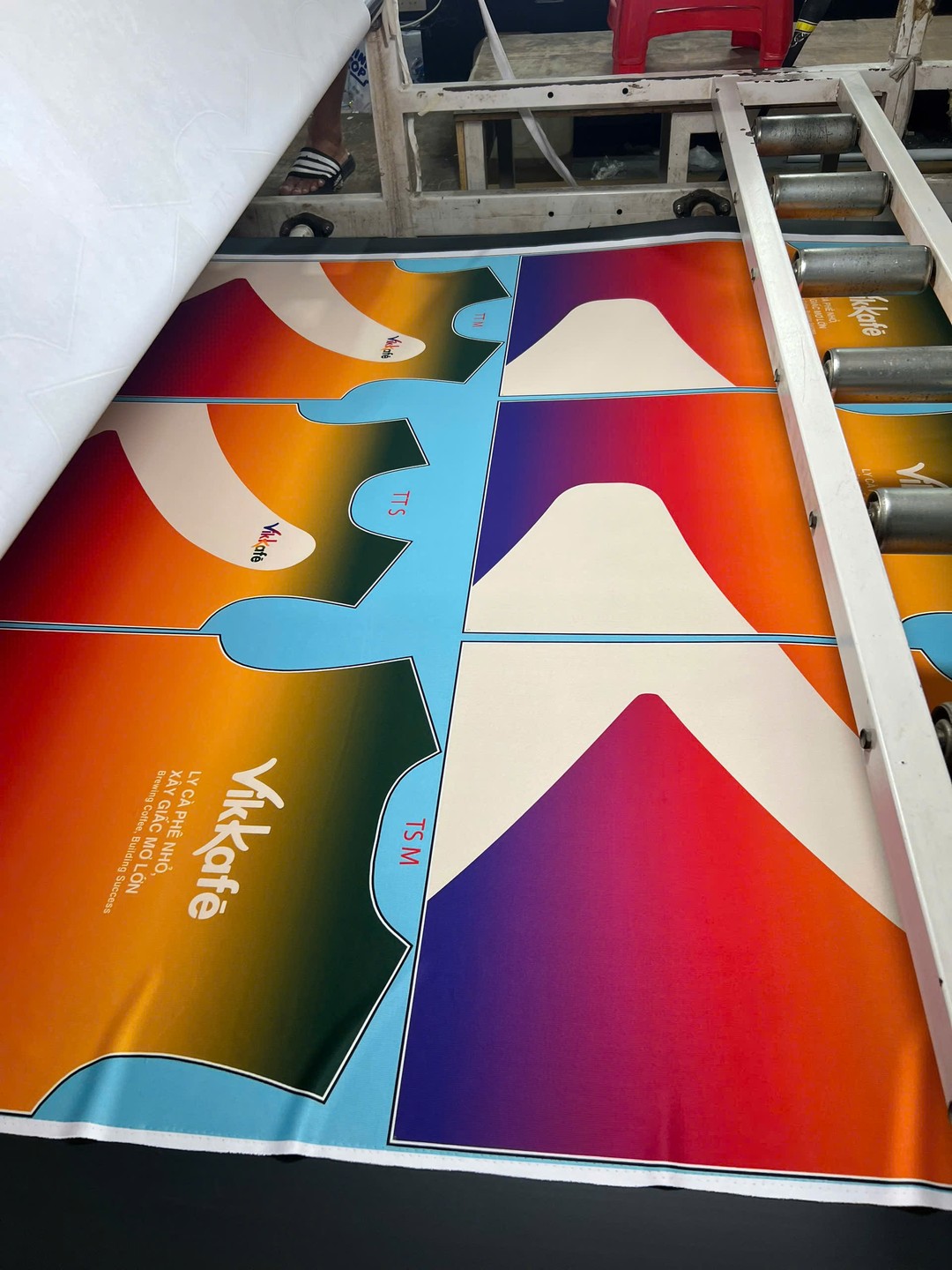
Graphics are printed using disperse sublimation inks onto specialized coated paper using industrial 16-head Kyocera printing lines (up to 1.8m width).
PRINT INDUSTRY KNOWLEDGE · T&T CORE FLAGSHIP SERVICE
QUICK ANSWER
Dye sublimation (thermal sublimation) is a digital textile printing method where disperse inks are printed onto high-grade transfer paper, then transferred under heat (~200°C) and pressure into polyester fibers. Because the dye bonds into the fiber core rather than sitting on top, the print will never crack, peel or fade, and the fabric remains completely soft and breathable.
In Vietnam and international garment manufacturing, this technology is also commonly known as heat transfer printing, all-over roll printing, or 3D fabric printing. They all describe the same core sublimation chemistry.
Graphics are printed using disperse sublimation inks onto specialized coated paper using industrial 16-head Kyocera printing lines (up to 1.8m width).
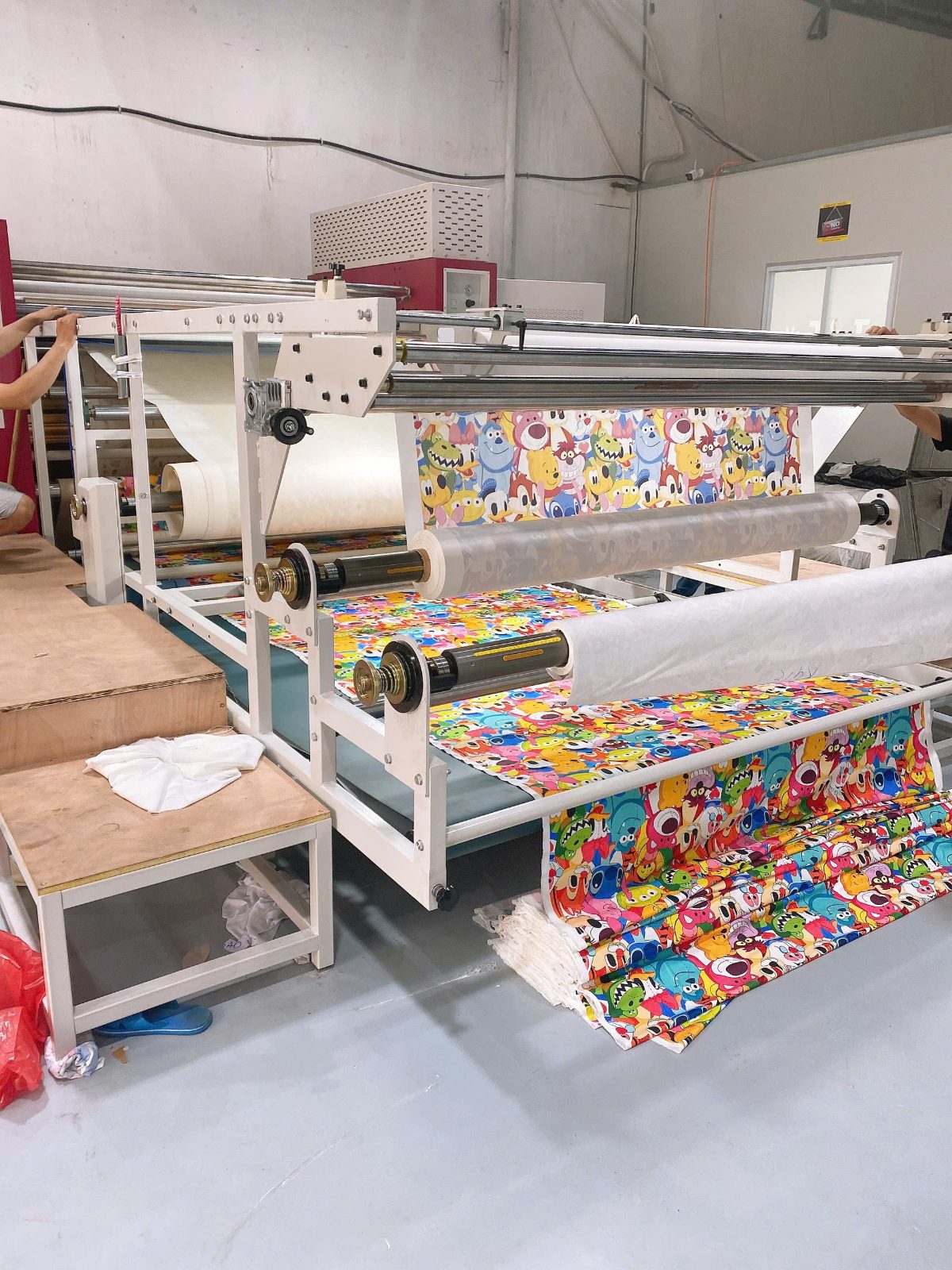
The printed paper and polyester fabric pass through a continuous rotary drum calender press at ~200°C. Temperature, belt speed and tension are calibrated for each fabric.
Solid dye transforms directly into a gas, penetrating deep into the opened polyester fibers and locking permanently inside the polymer structure.
Because the dye embeds inside the yarn, the fabric retains its original texture and hand-feel: completely breathable, pliable, crack-free, and 100% machine-washable.
For cotton or dark fabrics, T&T switches to DTF transfer printing, DTG direct printing, or digital cotton roll printing. View technology comparison.
Each textile printing method has distinct advantages regarding fabric type, volume, and cost efficiency. The comparison cards below help you select the optimal method for your apparel project:
For 1.6m roll width: from approx. 100m at 16,000–18,000 VND/m; above 1,000m at 11,000–15,000 VND/m; under 100m quoted per artwork file. Direct factory pricing with volume discounts.
T&T specializes in high-volume industrial sublimation printing for garment manufacturing facilities, fashion brands, corporate uniform suppliers, and export partners.
Roll fabric printing by meter: MOQ from 50 meters.
Cut panels & semi-finished apparel (jerseys, flags, scarves): MOQ from 200 pcs.
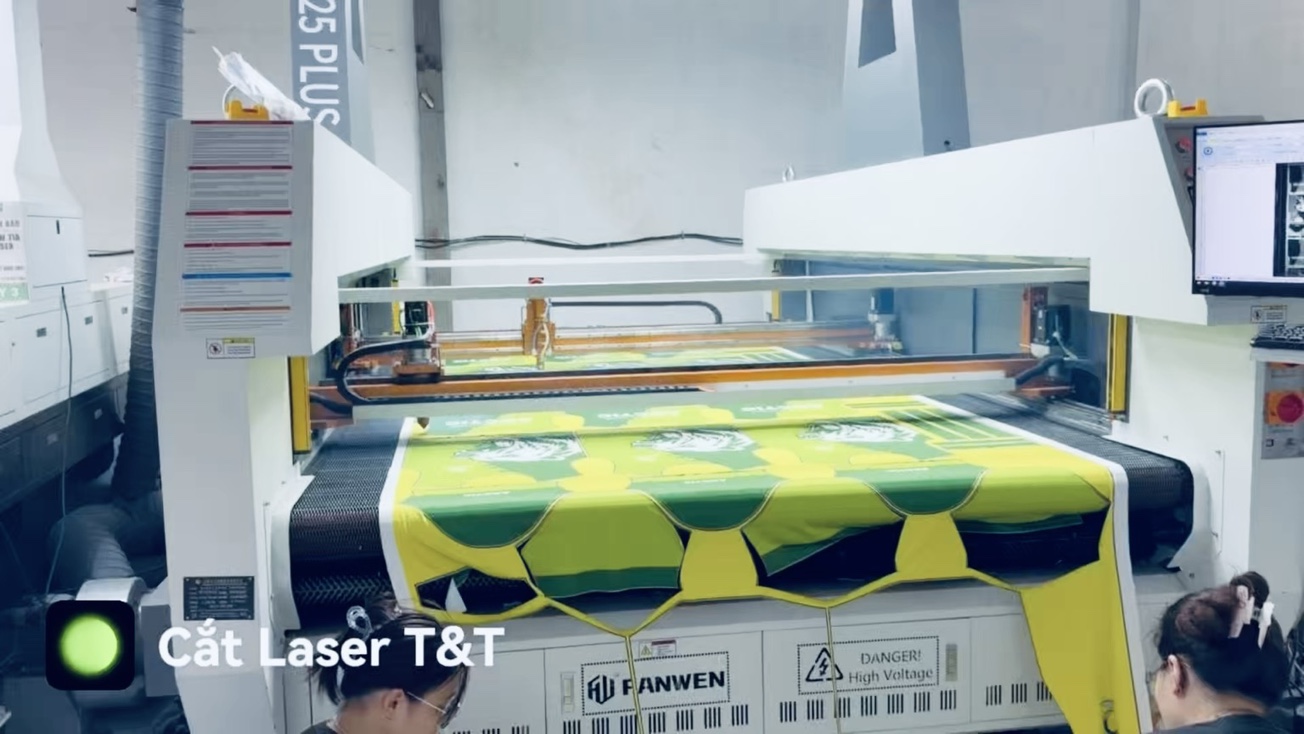
In-house automated laser cutting with optical recognition camera along printed contours.
1–2m color test sample on actual order fabric; approved swatch archived to match repeat orders.
Disperse printing inks certified OEKO-TEX® ECO PASSPORT (skin-safe & export compliant).
Send artwork files (AI, PDF, TIFF, PSD at 150–300 DPI, CMYK mode).
Pre-press technical file check, yardage calculation, and exact price quotation.
Print 1–2m complimentary color proof on your actual production fabric.
Approve color sample, lock production schedule, and place order deposit.
Industrial printing, continuous calender heat pressing, and optional laser cutting.
Quality inspection, export packing, delivery on schedule, and official VAT invoice.
You can bring or courier your own fabric directly to our factory. When visiting in person, please call or WhatsApp +84 395 46 46 86 beforehand so our engineering staff can welcome you.
Polyester or high-poly blend fabrics (around 70% poly or higher). The higher the polyester content, the brighter and more vivid the colors.
No. Sublimation dye penetrates deep into the polymer core of the fiber rather than forming a surface film. It will never crack, peel or chip, even after hundreds of machine washes.
No. Cotton fibers lack the synthetic polymer structure required to bond with sublimation dye (the ink washes out). For 100% cotton, we recommend DTF transfer printing or screen printing.
From 50 meters for roll fabric printing; from 200 pieces for cut garment panels or semi-finished items.
For 1.6m width: from approx. 100m at 16,000–18,000 VND/m; above 1,000m at 11,000–15,000 VND/m; under 100m quoted per artwork file.
Yes. In Vietnam, "in vải 3D" is a common industry term for wide-format dye sublimation printing with all-over graphics. It does not refer to additive 3D plastic manufacturing.
"4D printing" has no formal technical definition in textiles; it is primarily a marketing phrase often used to indicate ultra-high-definition prints or printing on 4-way stretch spandex fabric. Technologically, both are dye sublimation.
No. Sublimation inks are transparent dyes, so they cannot show up on dark backgrounds. For dark fabrics, T&T utilizes DTF transfer or DTG with a white ink underbase.
Yes. T&T prints a complimentary 1–2 meter sample on your actual production fabric so you can approve colors and hand-feel in real life before starting the run.
We use identical fabric specifications, the same approved ICC-profiled file, and match against a physical master archive swatch retained from your initial approved run to ensure repeat batches match perfectly.
Yes. Please inform us of your yardage and delivery deadline. Our production dispatchers will optimize press schedules and confirm exact lead times before booking.
Yes. We provide official VAT invoices (e-invoices) and arrange domestic delivery across Vietnam as well as export packing for overseas shipments.
Receive formal quotation and sample printing schedule within the same working day. WhatsApp & Hotline: +84 395 46 46 86.